

Study identifies Duke researchers as top cited in past 20 years for immunotherapy for glioma
A new study of advancements in immunotherapy for glioma analyzed the 100 most cited papers of the past 20 years and concluded that Duke researchers had made the biggest impact in the field.

Duke conducting first-in-human studies of cell transplantation for epilepsy
A groundbreaking clinical trial is taking a new approach to treat seizures: brain cell transplantation.
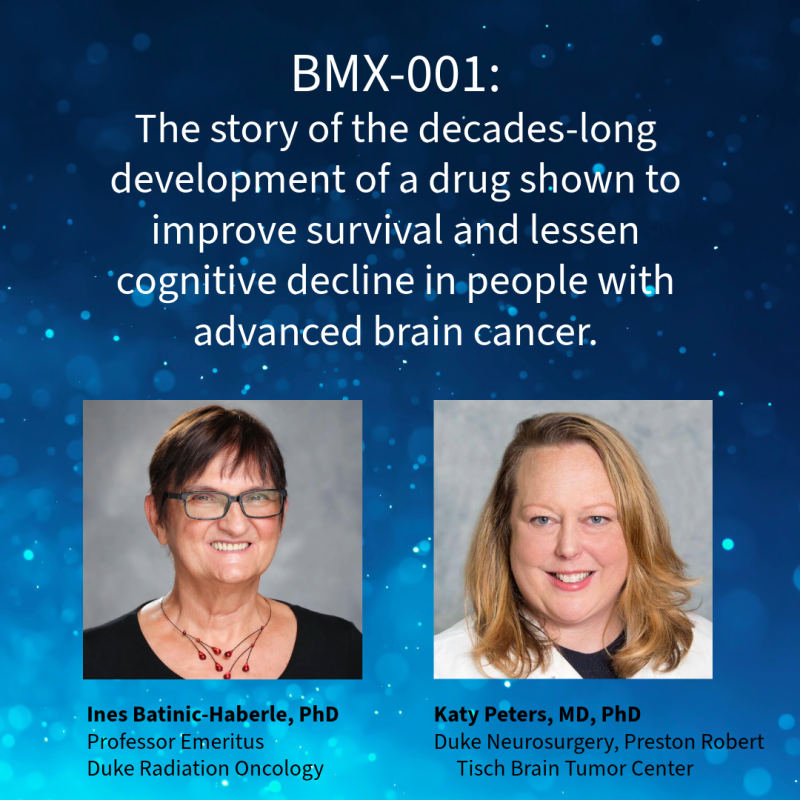
Drug born at Duke improves survival in people with advanced brain cancer
Ines Batinic-Haberle, PhD, professor emeritus of radiation oncology at Duke University School of Medicine, created hundreds of compounds before she hit upon the right one.

Survey finds link between drug/cannabis use during pregnancy and certain childhood cancers
While the risks of drug use, smoking and drinking during pregnancy are widely accepted, a new survey of parents has identified clear associations between certain types of childhood cancers and gestational substance use, notably cannabis.
Duke Researchers Train AI to Measure Tumor Volume After LITT
While laser interstitial thermal therapy (LITT) is increasingly used to treat brain tumors, it is sometimes associated with cerebral swelling and temporarily worsened symptoms.

Gender may be a prognostic factor in survival and clinical outcomes for patients undergoing treatment for spine metastases
Gender may be a prognostic factor in survival and clinical outcomes for patients undergoing treatment for spine metastases, a new retrospective review by Duke researchers finds.

Engineering a More Elegant Deep Brain Stimulation Therapy for Parkinson’s
A Duke University team has demonstrated two new strategies that use deep brain stimulation to improve the symptoms of Parkinson’s disease.
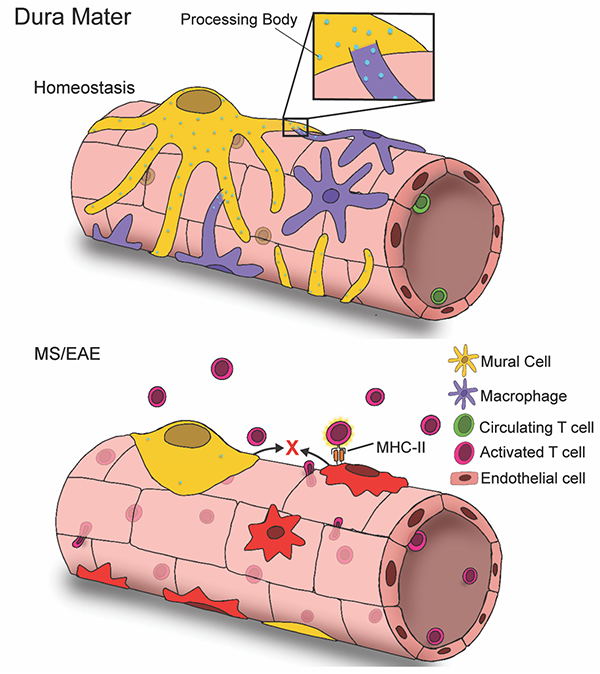
Duke researchers identify a cell interaction that might drive autoimmune diseases like multiple sclerosis
In a study out today, Duke researchers describe a newly discovered interaction of two specialized cells in the protective covering of the brain (dura).

Duke researchers find offering dual ICPI to some patients receiving SRS for brain metastases significantly improves local and intracranial control
Duke researchers have found that offering dual immune-checkpoint inhibition (ICPI) to patients with melanoma or non-small cell lung cancer who are receiving stereotactic radiosurgery (SRS) for brain metastases significantly improves local and intracranial control.

Peters promoted to professor
Duke neuro-oncologist and neurologist Katherine B. Peters, MD, PhD, was promoted to professor with tenure in Duke University's Department of Neurosurgery.