

Epilepsy
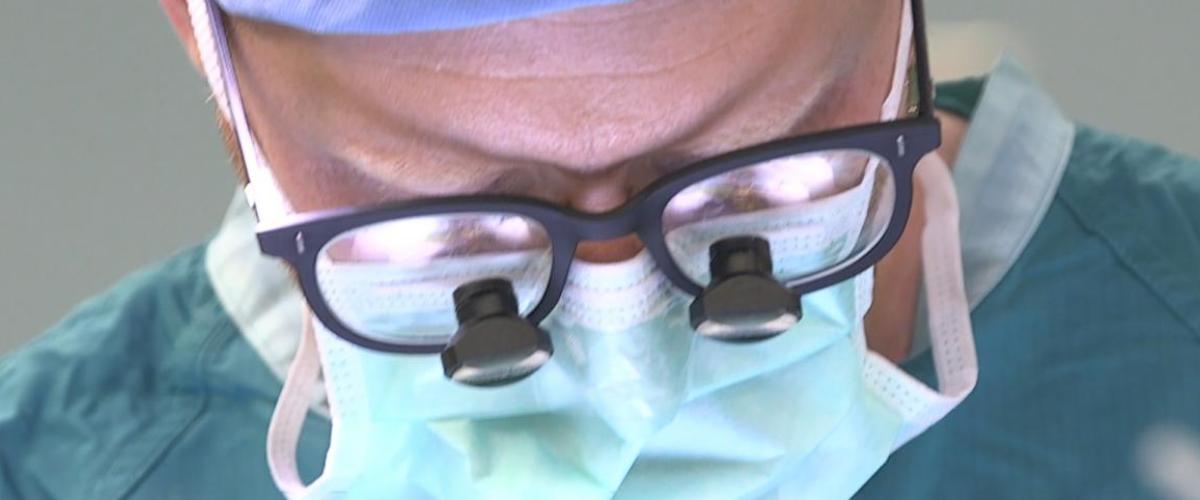
Rewiring hope
People living with epilepsy that does not respond to medication are seeing hope on the horizon, thanks in part to the cutting-edge research happening at Duke.
Standard surgical approaches to treating epilepsy have the goal of identifying and eliminating the area of the brain that produces seizures. This strategy, of removing or thermally ablating the seizure focus, can reduce, or even stop a patient’s seizures. But in some cases, tissue removal or ablation can negatively impact brain functions such as memory, language, or vision.
Duke is a leader in developing new treatments for drug-resistant epilepsy, with the goal of preserving these brain functions.
Brain cell transplantation
Duke was one of the first sites in the United States to treat a patient in a groundbreaking clinical trial using brain cell transplantation to treat seizures. The new experimental treatment involves the transplantation of specific human brain cells, called cortical interneurons, into the area that produces seizure activity. Animal studies have shown that transplanted mouse interneurons can survive in the recipient brain and make functional neural connections with recipient cells. Transplanted interneurons alter and restore neural circuit function in the area where they are grafted, and, in animals, they improve seizures.
“Traditionally, our goal has been to identify and eliminate the area of the brain that produces a patient’s seizures. That strategy, by which we remove or thermally ablate the seizure focus, can reduce, or even stop a patient’s seizures. But in some cases, tissue removal or ablation can negatively impact brain functions such as memory, language, or vision.”
Derek Southwell, MD, PhD

CellREADR
Duke neurosurgeon-scientist Derek Southwell, MD, PhD, is investigating the cellular properties and circuit functional roles of human cortical interneurons. Using tissues that are removed during neurosurgical procedures and CellREADR, a genetic tool invented by Southwell’s collaborator, Duke’s Joshua Huang, PhD, Southwell’s lab will study the functional properties of different types of human interneurons and investigate how they contribute to inhibitory signaling in human neural circuits.
Duke Center for Neurorestoration
Home / Stroke Recovery / Epilepsy / Traumatic Brain Injury / Movement Disorders / Neurotechnology / Brain Tumor Recovery / Spinal Cord Stimulation / Support the Research / Collaborators