

Movement Disorders
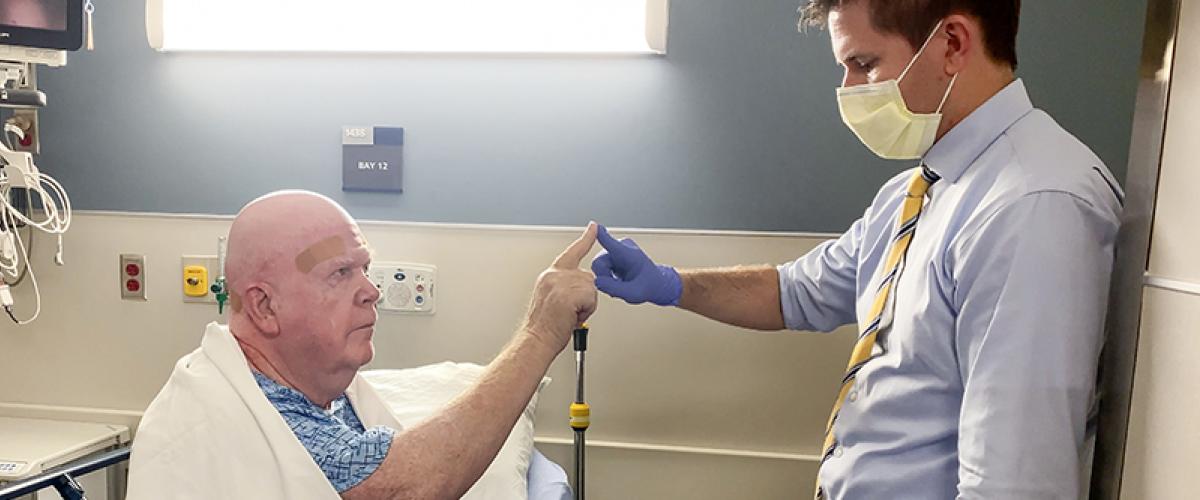
Life-changing treatments
HIFU (High intensity focused ultrasound)
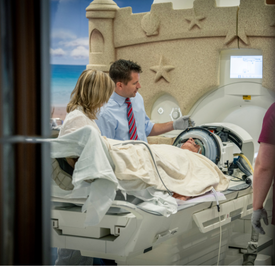
High-intensity focused ultrasound is a minimally invasive treatment being used today at Duke to dramatically change the quality of life of people with essential tremor and tremor-dominant Parkinson’s disease. The team led by Stephen Harward, MD, PhD, and Nandan Lad, MD, PhD, uses ultrasound waves to create a lesion in the area of the brain responsible for generating the tremors. Within seconds, patients may notice a dramatic improvement in the tremor. In addition, the Duke HIFU team has had experience safely performing the procedure on patients with pacemakers. Of the first 100 patients treated at Duke, eight had some type of implanted device like a pacemaker.
Duke is one of fewer than 75 hospitals in the country to offer this life-changing treatment.
DBS (Deep brain stimulation)
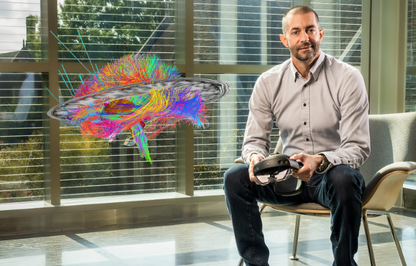
Subthalamic deep brain stimulation (DBS) has been used for more than 30 years to treat Parkinson’s disease and essential tremor. However, we are still working to fully understand the neural targets of the stimulation. Recently, Cameron McIntyre, PhD, professor of neurosurgery and biomedical engineering, published a study showing that DBS directed at the zona incerta can activate key brain pathways involved in movement control, while avoiding side effects linked to stimulating other regions. This Duke team is dedicated to improving DBS for movement disorders and developing the technology needed to expand its use into new clinical areas.
Duke Center for Neurorestoration
Home / Stroke Recovery / Epilepsy / Traumatic Brain Injury / Movement Disorders / Neurotechnology / Brain Tumor Recovery / Spinal Cord Stimulation / Support the Research / Collaborators